
Is there anything more human than having bad habits? We all have bad habits that can make us feel happy for a short while, but in the long run they make us less content.
Personal habits in the private environment include smoking, drinking, snacking, not enough sport or no sport at all, fast fashion shopping, using your smartphone excessively, gossiping, gaming and so on.
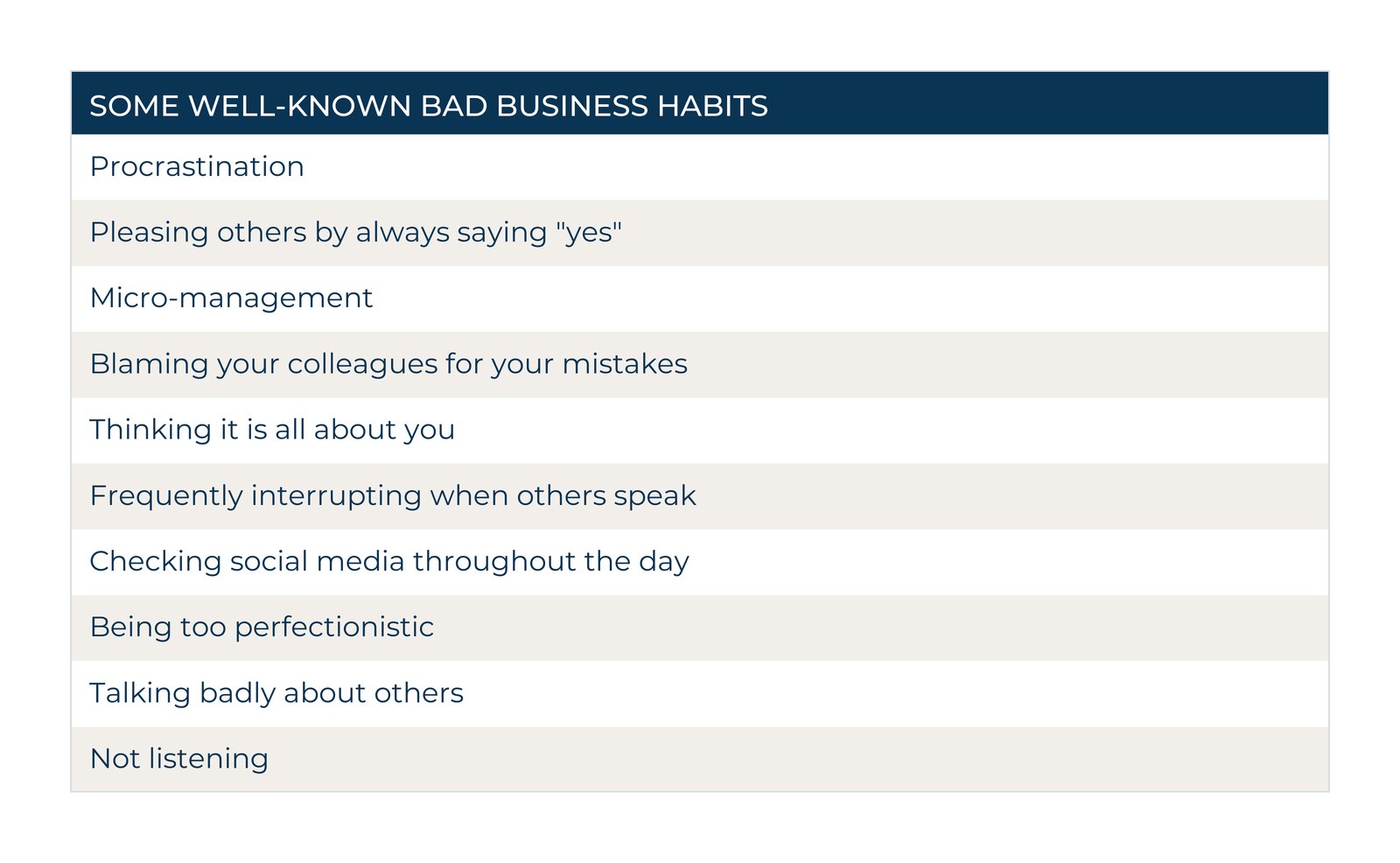
In business there are also many bad habits. See the list in the image above with some well-known bad business habits. (This is only the tip of the iceberg.) Looks familiar? Keep on reading!
In general, our behavior and attitudes are formed by habits that determine who we are and what we do. About 40% of everything we do in a day is driven by our habits. Most of the time we are not aware of our (bad) habits in business, so we do not realize the impact these habits can have. To quote Charles Duhigg (the writer of the book “The Power of Habit”): your habits determine your destiny.
Hence, it is very important to pay attention to our subconscious and become aware of these bad habits.
Habits develop slowly. A particular small action, like correcting someone during a meeting, has an immediate positive result and you feel good about it. That is a reward. And this process is called the habit loop: Cue (what triggers your brain to do something) > Routine (the action/behavior) > The reward (the prize you get as a result of your routine). For example: hungry > eat > sated.
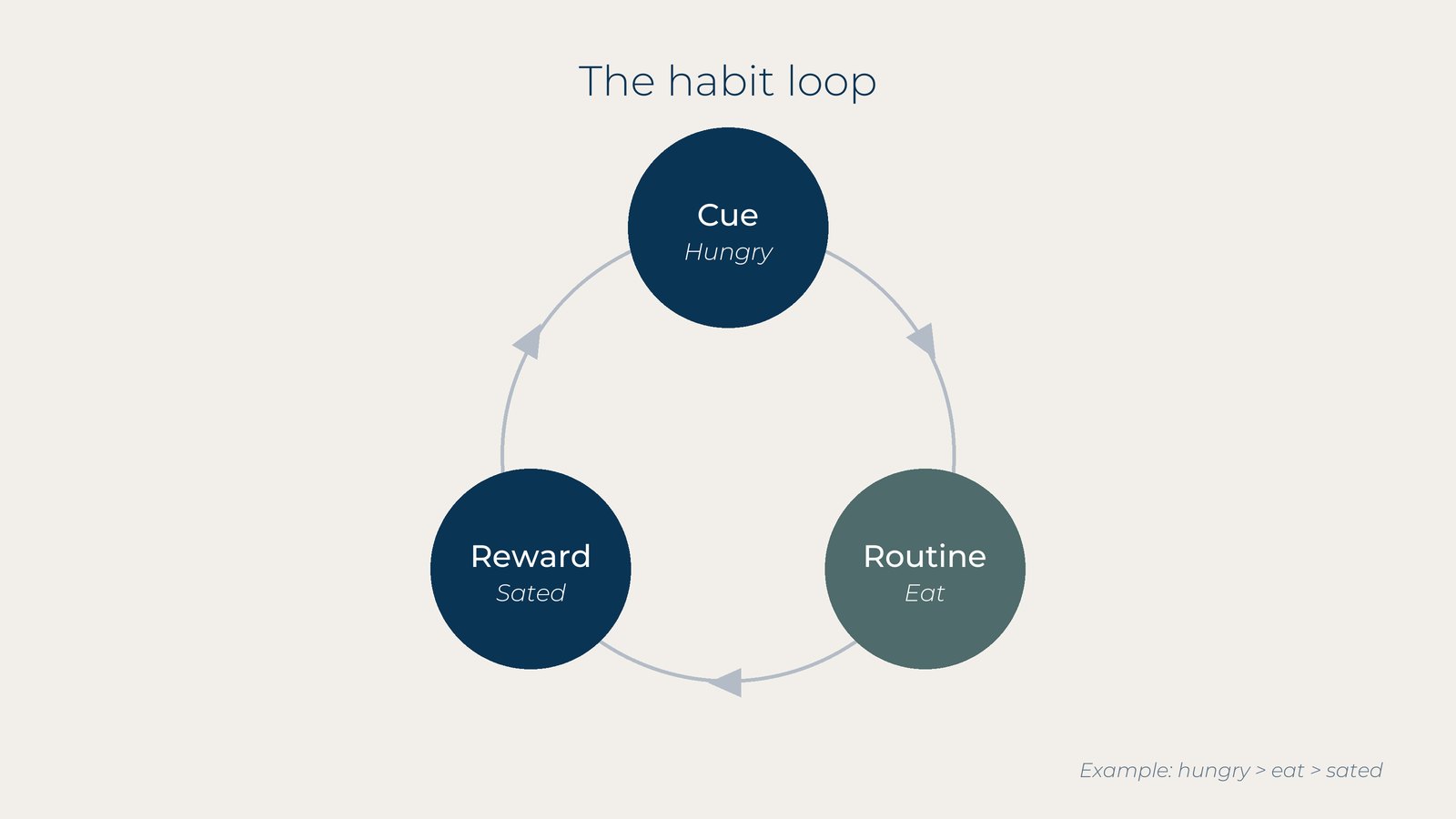
So, you start repeating that sequence of cue > routine > reward over and over again, and by doing that you turn the routine into a habit. If the brain is triggered for the wrong reason, the routine is often a bad habit.
The pitfall of bad habits is the short-term incentives. It is more pleasant to enjoy the immediate results now than to worry about the possible negative consequences of bad habits in the future. We aim for short-term gain. But we do not realize the long-term consequences: colleagues who get irritated and may avoid you, possible career limitations, customers who are less happy, disappointing business results and so on.
Why Do We Have Bad Business Habits?
There are many reasons, but the most common business reasons are: (1) wanting to be in control, (2) no confidence in your colleagues, (3) stress, (4) lack of discipline and/or motivation and negative emotions like (5) uncertainty, (6) no or not enough appreciation, (7) trust or (8) recognition.
Of course it also has to do with character and personality, but that does not mean you can’t change it.
How to Get Rid of Bad Habits?
For each of the bad habits mentioned, I could write an entire blog on how to specifically deal with that habit and stop it. Stay tuned, I will do that in the months to come.
Here are some general best practices that are applicable to all bad business habits.
As a main issue is that many business professionals are not conscious of their bad habits, or believe that what they do is not a bad habit, the first thing is to become aware of bad habits.
- Watch your behavior, attitude and actions carefully. Notice the reaction of other people (what they say to you, behind your back, what they write, if they are avoiding you, getting irritated, trying to nail or corner you, etc.) and find out why that is. Ask about your habits during performance reviews or directly in a meeting with your managers or a person you trust. If you ask honestly, you will get an honest answer.
- Practice mindfulness. Make yourself aware. Whenever you get the urge to engage in an unwanted habit, make yourself very aware. Experience the sensation in your body, notice what you think, feel how you take action.
Your inner voice is your inner wisdom.
- Minimize the immediate reward and envision the long-term consequences.
- Evaluate your actions, behavior and attitude consciously and regularly.
- The best way to stop a bad habit is to replace it with a good habit. Because forbidding yourself something is experienced by your brain as meddling and your system will revolt. Offering yourself something else instead is the better option!
- Don’t try to boil the ocean. Start small and work on only one bad habit at a time.
THE GOLDEN NUGGET: Share your plan to stop a bad habit with your friends or colleagues. This has two advantages: 1. You create an obligation to keep your promise and 2. Your colleagues will appreciate this and will help you.
Please contact me if you would like to get more information or would like to be coached on successfully quitting bad habits.
Joost