Not All Competitors Are the Same
True monopolies are rare. Most companies operate in markets crowded with competitors fighting for the same customers. But a critical mistake is assuming all competitors behave in the same way.
Even within one industry, companies often pursue fundamentally different strategies, business models, and value propositions. That means they should not be met with the same competitive response.
This leads to a more important question than “Who are our competitors?”:
“What type of competitor are we dealing with?”
A company focused on customer intimacy competes very differently from one focused on operational excellence or product leadership. If you misread the type of competition, you also misread the intelligence you need, and you risk making the wrong strategic decisions.
Feature Wars: When Competition Becomes a Specification Race
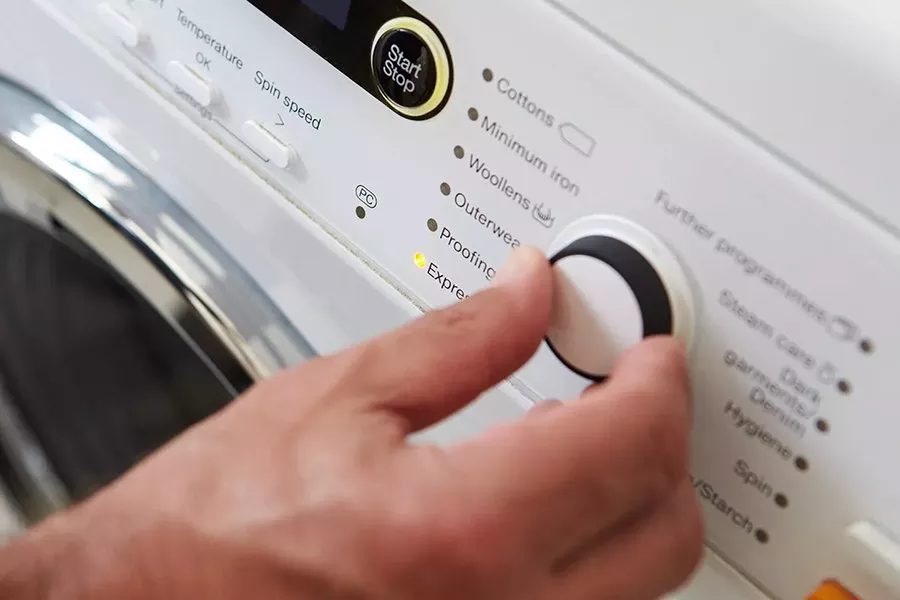
Walk into any electronics store and compare washing machines. One has 16 wash programs, another 18. One spins at 1,400 rpm, another at 1,600. One offers steam cleaning, another adds AI-powered fabric recognition.
Welcome to point competition: a form of competition where companies offer largely similar products and compete by adding, improving, or emphasizing individual features and specifications.
It is one of the most common competitive strategies in mature industries. It is also one of the least sustainable.
It is characterized as: Winning Features, Losing the War?
The red queen effect.
Point competition occurs when companies compete primarily through product features, specifications, and performance improvements rather than through fundamentally different business models, customer experiences, or outcomes. It is common in mature industries such as consumer electronics, automotive, telecommunications, insurance, and household appliances. Competitors continuously seek advantage through better performance, more functionality, higher quality, or additional features, assuming that customers compare products and select the superior option.
This approach can be effective when customers are knowledgeable, technical differences are meaningful, and markets are still evolving. However, as industries mature, feature advantages become increasingly difficult to sustain. Competitors quickly copy successful innovations, causing products to become more alike over time. Companies invest heavily in research and development, product management, testing, and marketing, yet often achieve little meaningful differentiation. The result is a “Red Queen race” in which everyone runs faster, but nobody gains a lasting advantage.
Feature Inflation
The fundamental weakness of point competition is that most features can be replicated. Product functionality, design elements, technical specifications, service levels, and pricing structures are all relatively easy to imitate. In contrast, assets such as brand trust, customer relationships, distribution networks, ecosystems, organizational capabilities, and unique business models are much harder to copy. As competitors continuously add features, many markets experience feature inflation, creating increasingly complex products that customers often do not fully use.
But when our dishwasher broke down, I asked my wife how many different functions we had been using over the last couple of years. She answered: “ONE!”
Intelligence and insights
To support their strategy, point competitors rely heavily on intelligence. They closely monitor competitors’ products, launches, roadmaps, patents, claims, and pricing. They gather customer insights through satisfaction research, usage data, reviews, and win-loss analyses. Market intelligence helps them track trends, technologies, regulations, and market share shifts, while product intelligence uses benchmarking, reverse engineering, and competitive testing to identify strengths and weaknesses.
Point competitors face growing pressure from price fighters offering simpler, “good enough” products at lower prices, and from solution providers that compete on outcomes rather than products. Ultimately, sustainable success rarely comes from winning feature battles alone. The strongest companies combine competitive products with superior customer experience, services, business models, ecosystems, and customer outcomes. The key strategic question shifts from “How can we build a better product?” to “How can we create more value for customers than anyone else?”
A competitor simulation or a competitive battle card help to get the right insights visible. Would you like to run such a simulation or create a battle card?
At Marix International, we help organizations build, strengthen, and optimize their market and competitive intelligence capabilities, enabling them to make better strategic decisions and compete more effectively.
Contact us: www.marix.be info@marix.be +32 472 700 117