For a long time, competition revolved primarily around companies vying for the same customers. Who had the strongest brand? Who could offer the lowest price? Who had the best product or the most attractive solution? In marketing, we talk about brand competitors, price or point competitors, and solution competitors.
But the competitive landscape is changing. In the future, the most important competition may increasingly shift away from the sales side and toward the procurement side. The question will no longer be just: “Who makes the best product?” but, above all: “Who still has access to the raw materials needed to make that product?”
From Abundance to Scarcity
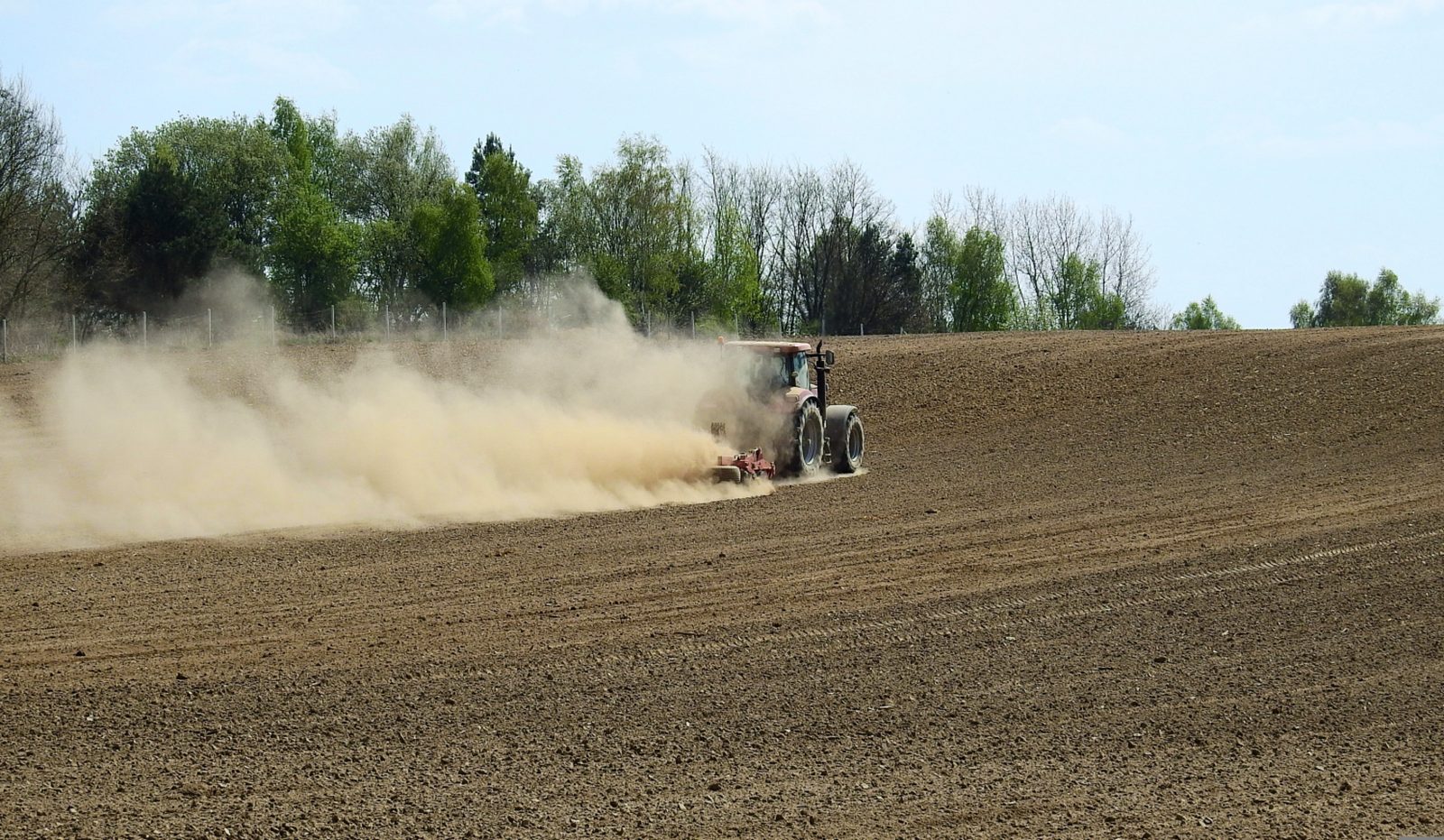
The first signs are already visible. Fish stocks are under pressure, forests are disappearing, and the availability of wheat, grain, barley, and malt is becoming increasingly vulnerable to drought, extreme precipitation, and heat.
For a brewery, barley is not just another purchase item. Without enough barley, less beer can simply be brewed. The same applies to wheat for a baker. A poor harvest not only leads to higher raw material prices but also has ripple effects throughout the entire supply chain: affecting producers, retailers, and ultimately consumers.
The quality of raw materials is also changing. Extreme heat and drought, for example, can damage grapes even before harvest. As a result, production areas may become less suitable for certain crops. What is an exceptionally poor harvest year today could become a structural problem tomorrow.
A powerful symbol of this trend is Earth Overshoot Day: the day on which, according to calculations by the Global Footprint Network, humanity has consumed all the natural resources that the Earth can regenerate that year. In the long term, that day is falling earlier and earlier. This illustrates the increasing pressure on our planet’s natural carrying capacity.
And ultimately, this is also an economic issue. Every business depends on the physical world: raw materials, water, energy, farmland, and ecosystems.
The high-tech economy is also dependent
Moreover, the battle for raw materials goes far beyond food.
Metals and minerals are also becoming increasingly important. Gold and copper are well-known examples, but for high-tech industries, lesser-known elements such as gallium, tantalum, and hafnium are also of great significance. They are used in electronics, semiconductors, telecommunications, energy, and advanced technology, among other things.
Behind every smartphone, chip, electric car, or data center lies a long physical chain of mining, refining, and processing. If a single crucial raw material or a single link in that chain is lost, it can have consequences for companies thousands of kilometers away.
As a result, competition for raw materials also becomes geopolitical competition. It’s not just the quantity of a raw material that matters, but also where it is extracted, who controls the refining process, and which countries control exports.
A company may therefore be dependent on a material that comes from only a few countries. A disruption there can lead to production problems here.
The new competitor is with the same supplier
This marks a fundamental shift.
Suppose two breweries are currently serving the same market. They compete on brand, price, distribution, and innovation. But if there isn’t enough barley available, they suddenly find themselves competing for the same limited supply of raw materials.
The competitor is no longer right next to you on the store shelf.
They are sourcing from the same supplier.
This applies to food producers, manufacturers, and technology companies. Those with access to scarce raw materials may ultimately have a greater competitive advantage than those who merely have a strong brand or a more efficient marketing strategy.
Access to raw materials thus becomes a strategic asset in its own right.
What kind of intelligence does a company need?
This calls for a different form of business intelligence.
Many companies are good at analyzing customers, competitors, prices, and market trends. But how many companies know exactly which raw materials they depend on? Where do they come from? How many alternative suppliers are there? Which countries dominate production? Which raw materials might become scarce? And what happens if a supplier or production region fails?
Raw materials intelligence must therefore become part of the business strategy.
Data and artificial intelligence can play an important role in this. Climate data, harvest forecasts, raw material prices, geopolitical developments, trade flows, transportation, and regulations can all be linked together.
This allows a company to recognize earlier on that a problem at the beginning of the supply chain will later become a production problem.
The question thus shifts from:
What do we expect to happen?
to:
What will we do if it happens?
This is a fundamentally different way of thinking strategically.
From Efficiency to Resilience
Business operations must also change.
For decades, maximum efficiency was the central focus. Inventory had to be kept as low as possible, production took place where it was cheapest, and companies operated with increasingly optimized global supply chains.
This yielded significant benefits, but it also made many supply chains vulnerable.
A company with a single low-cost supplier on the other side of the world can be highly efficient, until that supplier can no longer deliver.
That is why resilience is becoming increasingly important. Companies will have to strike a balance between efficiency and security.
This could mean: multiple suppliers, strategic stockpiles, regional production, long-term contracts, recycling, and alternative raw materials. In some cases, it may even make sense to move closer to the source and strategically invest in agriculture, mining, energy, recycling, or suppliers.
For example, a brewery seeking security in its barley supply could establish long-term relationships with growers. A technology company could invest in recovering scarce metals from discarded equipment. A manufacturer could develop products that are less dependent on critical raw materials.
Ultimately, the best strategy is not to wait until a shortage arises, but to ensure that you are less vulnerable to shortages.
Supply Chain Becomes Executive Strategy
This also changes the role of supply chain management.
Raw materials are no longer just an operational procurement issue. They are becoming a strategic issue for executive management and the board.
Companies need to know which raw materials are critical, which of these are difficult to replace, and how vulnerable their supply is.
This involves considering scenarios: What happens if a key raw material becomes 30 percent more expensive? What if availability is cut in half? What if a supplier drops out? What if a country imposes export restrictions?
And above all:
How long can we continue to produce if the supply of this raw material stops?
Questions like these are likely to become just as important as revenue growth, market share, and profitability.
A New Definition of Competitiveness
The traditional competitive battle was about the customer. The new competitive battle is increasingly about access.
Access to raw materials, energy, water, farmland, metals, and production capacity.
Companies that understand this early on can build a significant competitive advantage, not necessarily because they have the best product, but because they can continue to make the product when others can no longer do so.
The classic question was:
How do I beat my competitor?
The new question is:
How do I ensure that, in ten or twenty years, I’ll still be able to produce what my customer needs?
Tomorrow’s competitor might not be right next to you on the store shelf.
He’s competing for the same mine, the same farmland, the same fish stocks, or the same source of fresh water.
The battle for the customer is giving way to the battle for what is needed to continue selling to that customer.
If you want to know more about this form of competition and need support in further developing your strategy, contact Marix. We can help you.